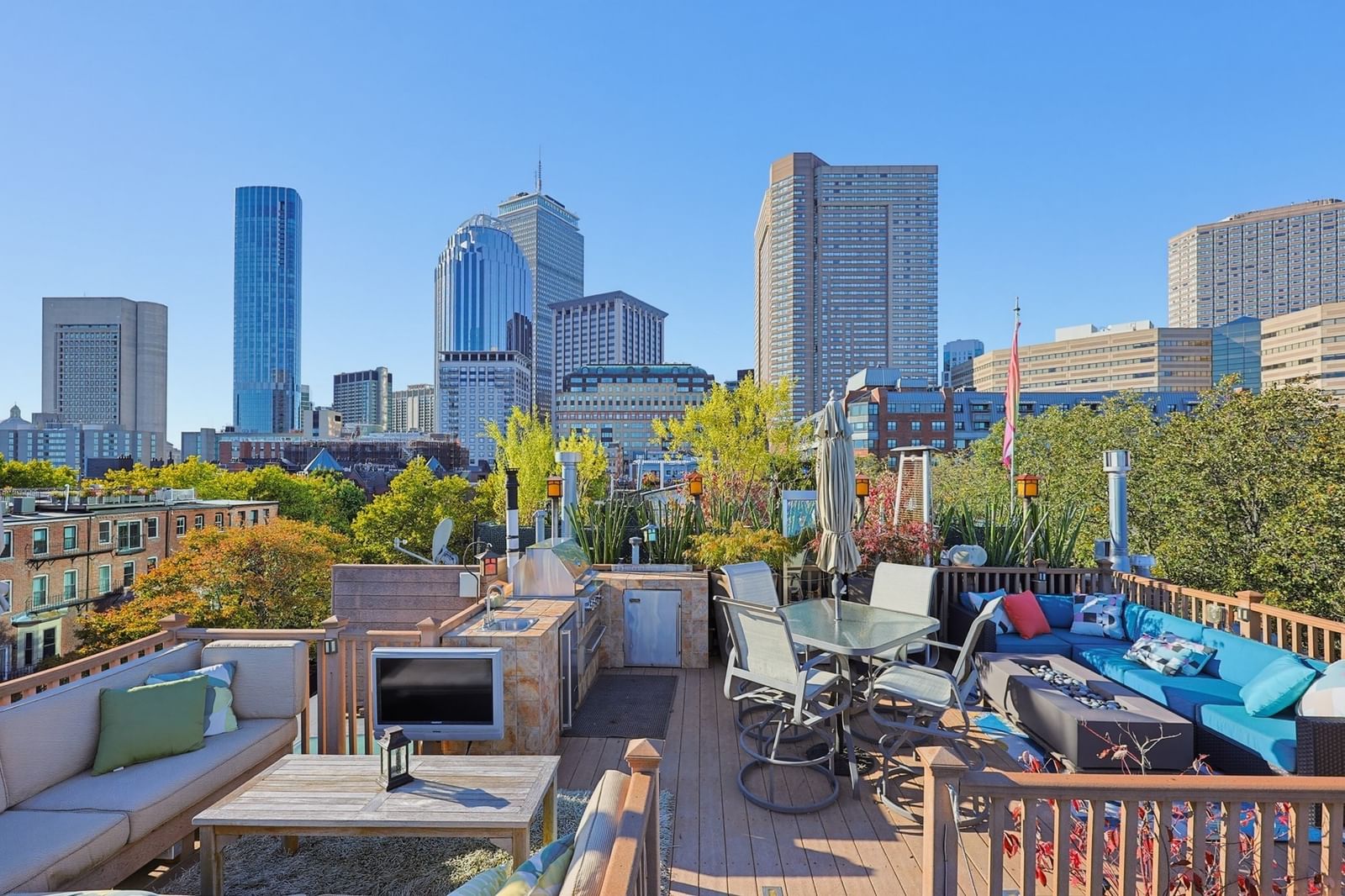
Living in South End: Brownstone Equity Upside for Investors
South End: 3.5–5% cap rates, $2M–$6M+ buildings, $3,500–$4,500 two-bedroom rents, Chester Square to Golden Triangle, 1 mile downtown.
Written ByNick Mishol
PublishedNovember 23, 2026
I'm Nick Mishol, a Boston real estate agent helping buyers, sellers and investors in Boston, Brookline and Newton. I bring rental-market experience to every deal. Serving Boston, Brookline, Newton, Watertown and Waltham, MA.
The South End is a market for appreciation and equity capture, not cash flow. Published cap rates on South End multi-family run 3.5–5%. Residential vacancy sits below 3%, and two-bedroom rents are among the highest in Boston. Leveraged buyers should expect thin or negative cash-on-cash returns at acquisition. The returns come from three places: rent growth, forced appreciation through renovation, and the gap between whole-building pricing and per-unit condo values. Each lever is covered below.
What cash flow can you expect from a South End multi-family property?
Unlevered yields on stabilized South End 2–4 unit buildings sit at the bottom of the Boston range. Buildings typically trade at 3.5–5% cap rates, which means any debt priced above the going-in cap rate creates negative leverage from day one. Treat the South End as a low-yield, low-vacancy store of value. Underwrite cash flow as a function of rent growth, not entry yield.
What do multi-family buildings cost in South End?
Multi-family investment properties in the South End trade between $2M and $6M+. For comparison:
•Single-family brownstones run $3M–$8M+.
•Individual Victorian brownstone condos run $700K–$4M+.
Price per unit depends on unit count, condition, and sub-area. A four-unit building at $3M works out to $750K per door. That's below the entry price of many individual condos on the same blocks, and it's the basis of the conversion spread covered later.
Location changes the math. Condo pricing ranges from:
•$850–$1,000/sq ft in Chester Square
•$900–$1,100+ in South End South
•$950–$1,100+ in Worcester Square
•$1,550–$2,000+ in the Golden Triangle
The south and west edges, near Blackstone Square and Franklin Square , have the lowest basis per square foot. The core brownstone blocks carry a premium of roughly 50–100%.
How do South End rents compare to acquisition costs?
Two-bedroom units rent for $3,500–$4,500+ per month, and rental vacancy runs below 3%. Here's an illustrative pro forma for a stabilized four-unit building bought at $3M:
Data Table
Line item
Annual figure
Basis
Gross potential rent (4 × $4,000/mo)
$192,000
Midpoint of 2BR range
Vacancy & credit loss (3%)
–$5,760
Market vacancy below 3%
Property tax ($12.40 per $1,000)
–$37,200
FY26 residential rate on $3M
Insurance, repairs, management, common utilities
–$45,000
Assumption, verify per building
Net operating income
≈ $104,000
Implied cap rate
≈ 3.5%
Gross yield per door is about 6.4%. After taxes and operating expenses, that drops to a 3.5% cap rate, the floor of the market range. Two inputs push it toward 5%:
1. A lower basis. Chester Square and South End South price at roughly half the per-foot cost of the Golden Triangle.
2. Rents at the top of the range. These come from renovated units, in-unit laundry, and outdoor space.
How does debt service affect South End cash flow?
Positive leverage requires debt that costs less than the cap rate. At 3.5–5%, that rarely happens. Assume that:
•A conventionally financed purchase at 25–30% down will carry negative monthly cash flow at acquisition, or break even only with above-market rents.
•Getting to neutral cash flow usually takes a larger equity contribution, an all-cash purchase, or owner-occupying one unit.
•The return case rests on three things: principal paydown, appreciation, and value-add NOI growth.
How will property taxes affect South End NOI?
Boston's FY26 residential rate is $12.40 per $1,000, up from $11.58 in FY25. That's a rate increase of about 7% in a single year. Rising assessments compound it: the average single-family tax bill citywide rose about 13%.
Proposition 2½ caps the city's total levy growth at 2.5% per year. It doesn't cap any individual owner's bill. As the commercial share of values softens, more of the levy shifts onto residential owners.
Mixed-use buildings need their own underwriting. Ground-floor commercial space is taxed at $26.96 per $1,000, more than double the residential rate. That changes the economics of storefront-plus-apartments buildings on Washington Street and Tremont Street.
Boston FY26 Property Tax Rates
Commercial and industrial property carries a substantially higher tax rate than residential property, an important underwriting input for mixed-use and commercial investors.
Commercial and industrial property carries a substantially higher tax rate than residential property, an important underwriting input for mixed-use and commercial investors.
Series
Label
Value
2026 Tax Rate
Residential
$12.40
2026 Tax Rate
Commercial, industrial, personal property
$26.96
Source:Boston.govAs of FY 2026Per thousand dollars of property value.
What drives tenant demand in South End?
Short trips to the main job centers hold rents up. The South End is about 1 mile in a straight line from the Financial District, roughly 12 minutes by car or 27 minutes door to door by transit for an 8:00 weekday-morning departure. Kendall Square is about 2 miles away.
The neighborhood has a Walk Grade of 93, and 45.2% of residents live without a vehicle. A building without parking gives up little rent.
Weekday-Morning Access to Job Centers
The South End sits close to core employment nodes by car, while door-to-door transit times are longer for an eight o’clock weekday-morning departure.
Financial District, Boston, MA
Kendall Square, Cambridge, MA
The South End sits close to core employment nodes by car, while door-to-door transit times are longer for an eight o’clock weekday-morning departure.
Series
Label
Value
Financial District, Boston, MA
Drive with no traffic
11 minutes
Financial District, Boston, MA
Drive leaving at 8:00 on a weekday
12 minutes
Financial District, Boston, MA
Public transit leaving at 8:00 on a weekday, door to door
27 minutes
Kendall Square, Cambridge, MA
Drive with no traffic
14 minutes
Kendall Square, Cambridge, MA
Drive leaving at 8:00 on a weekday
16 minutes
Kendall Square, Cambridge, MA
Public transit leaving at 8:00 on a weekday, door to door
36 minutes
Source:Google Maps routing estimatesTravel times are estimates.
On the supply side, the proposed Albany Street development would add 408 hotel rooms, an estimated 200 jobs, and a 137-space garage near the neighborhood's eastern edge. That's hospitality supply, not residential, so it doesn't compete directly with long-term rentals.
Proposed Albany Street Development
A planned mixed-use hotel project would add hospitality supply, parking, and jobs near the South End’s urban edge.
Can you add an ADU or extra units to a South End property?
You can add density in the South End, but the constraints are tight. Expansion usually means converting space inside an existing rowhouse, most often the garden or basement level. Detached ADUs are rarely feasible. Two layers of regulation apply to nearly every project:
•Base zoning. The neighborhood has its own district zoning article.
•Historic review. The South End was designated a Boston Landmark District in 1983 and has been on the National Register of Historic Places since 1973. Any exterior change visible from a public way needs review.
How do zoning and historic rules limit South End density?
The typical South End parcel is a narrow, deep rowhouse lot with a small rear yard. Building coverage and setbacks leave little room for detached construction, and lots already built close to their maximum floor area ratio (FAR) have no buildable area left. The permit record shows it: over the last 12 months, only 2 garage or outbuilding permits were filed near the neighborhood center.
Rear-lot projects also have an access problem. Many South End alleys are private ways narrower than Boston's 53-foot standard residential right-of-way, and some fall short of the 40-foot minimum for emergency access. That limits construction staging and makes a separately addressed rear dwelling hard to create. Alley access rules may change, so check current requirements. Until they do, treat rear-lot ADUs as speculative.
Does a garden-level ADU pencil out in South End?
Interior conversions are where density value actually gets created. Use capitalization math to set a capex ceiling:
•Each $1,000/month of new rent adds $12,000 of annual NOI.
•At a 4% cap rate, that $12,000 is worth about $300,000 of building value.
•A garden unit renting at the bottom of the 2BR range ($3,500) adds about $42,000 of NOI, worth roughly $1.05M at a 4% cap.
Those figures exceed most interior conversion costs, so the math works if the conversion is permitted. The binding constraints are ceiling height, egress, fire separation, and utility metering. Market rent isn't the issue.
Fire separation is a common reason projects stall. Open building violations in the area include fire separation and fire protection system citations. Price any garden-level conversion with a full life-safety scope.
How long do South End permits take?
There's no published standard timeline. The steps run in sequence:
1. Landmark commission review for exterior changes
2. Zoning relief where an added unit exceeds as-of-right density
3. A building permit
If a project needs a variance, a 6–12 month entitlement runway is a reasonable underwriting assumption. Carry costs over that period eat into the spread.
The neighborhood logged 703 permits in 12 months, 65% above the average Boston neighborhood. Only 1 major project was underway, 80% below the city average. This is a market of incremental reinvestment in existing buildings, not ground-up density.
South End Development Activity by Permit Type
Permit volume is concentrated in building, electrical, and home-improvement work, signaling steady small-project reinvestment rather than a wave of major ground-up projects.
Permit volume is concentrated in building, electrical, and home-improvement work, signaling steady small-project reinvestment rather than a wave of major ground-up projects.
The South End's main value-add arbitrage has three parts:
•Buying dated or distressed multi-family buildings at a whole-building price
•Renovating the 19th-century shell
•Exiting either as stabilized, higher-rent units or as individually sold condos priced per square foot
The spread is widest when the purchase basis is in a cheaper sub-area and the finished product competes with core-block or new-construction pricing.
How large is the discount on distressed South End multi-family?
Compare per-foot pricing across product types:
Data Table
Product
Price per sq ft
Chester Square
$850–$1,000
Worcester Square
$950–$1,100+
SoWa
$1,100–$1,400
Ink Block
$1,400–$1,800+
Top units in new full-service buildings
$1,200–$1,700
These ranges imply a gap of roughly $300–$600 per square foot between an unrenovated building at the low end and finished units on the same street, before costs. Unrenovated buildings in the Chester Square and South End South pockets offer the deepest discount. Properties near SoWa Health + Wellness and the Harrison Avenue corridor see more amenity-driven demand at exit.
What do renovations cost in South End's historic buildings?
Get contractor bids before you write an offer. Historic-shell renovation costs vary widely by scope. The cost drivers specific to South End housing stock are:
•Exterior masonry, cornice, and window work subject to Landmark District standards. Replacement windows and facade materials have to meet historic guidelines, which raises the cost of exterior work.
•Mechanical, electrical, and plumbing (MEP) replacement. Electrical (162) and plumbing (84) were the second- and fourth-most-common permit types in the last 12 months, a sign of how often these systems need replacing.
•Soft costs: architect fees, historic review, permit fees, and carry during approvals.
•Permit compliance risk. Failure to obtain a permit is the most common open building violation locally (7 of 20), and open violations run 43% above the city average. Pull the property's permit history before closing. Unpermitted prior work becomes your liability.
What ARV and cash-on-cash returns should South End value-add investors target?
Work backward from after-repair value (ARV):
1. Set ARV from finished comps in the same sub-area, not neighborhood-wide pricing. A renovated Chester Square unit won't sell at Golden Triangle prices.
2. Subtract hard costs, soft costs, carry, transaction costs, and a 10–15% contingency for historic-envelope surprises.
3. Require a margin. For condo-conversion exits, target at least 15–20% of ARV to cover execution risk.
For rental holds, size the renovation to the rent increase. Moving four units from the bottom of the 2BR range to the top adds about $48,000 of annual NOI. At a 4% cap, that's roughly $1.2M of created value.
Cash-on-cash returns improve after the refinance, not at purchase. The usual sequence:
1. Buy with heavy equity.
2. Renovate.
3. Re-lease units at top-of-range rents.
4. Refinance against the higher NOI to pull out capital.
For this strategy, the post-refinance cash-on-cash return is the number that matters. The day-one yield isn't.
What are the trade-offs of investing in South End?
You give up current income. In exchange, you get very low vacancy, deep tenant demand at top-of-market rents, and a deep resale market for finished units. You also take on three costs that cheaper Boston submarkets largely avoid:
•Historic-district execution risk on any exterior change
•Limited ADU upside because of lot geometry and alley access
•A rising residential tax rate that cuts into NOI each year
Walkable retail anchors such as Formaggio Kitchen - South End and Flour Bakery + Cafe support rent premiums for buildings within a few blocks. Underwrite those premiums from actual leases on the block, not neighborhood averages.
When evaluating family rental demand, note that the neighborhood's public elementary school, Blackstone School , sits on Blackstone Square. Boston Public Schools assigns students by citywide policy, not strictly by address.
The bottom line: the South End rewards patient capital and renovation competence. It doesn't reward investors who need monthly cash flow from a leveraged purchase.
What budget do buyers need for condos or brownstones in the South End, Boston, MA?
Individual Victorian brownstone condos in the South End run about $700K–$4M+, while single-family brownstones run about $3M–$8M+. Multi-family investment buildings typically trade in a $2M–$6M+ band, with pricing shaped by unit count, condition, and sub-area.
Which parts of the South End, Boston, MA are more affordable for condo buyers?
Condo pricing varies sharply by sub-area. Chester Square runs about $850–$1,000 per square foot, South End South about $900–$1,100+ per square foot, Worcester Square about $950–$1,100+ per square foot, and the Golden Triangle about $1,550–$2,000+ per square foot. The south and west edges near Blackstone Square and Franklin Square offer the lowest basis per square foot.
How is the commute from the South End, Boston, MA to major job centers?
The South End is about 1 mile in a straight line from the Financial District, with an estimated 12-minute car trip or 27-minute door-to-door transit trip for an 8:00 weekday-morning departure. Kendall Square is about 2 miles away.
Do families in the South End, Boston, MA have a neighborhood public elementary school?
Blackstone School is located on Blackstone Square in the South End. Boston Public Schools assigns students by citywide policy, not strictly by a home’s address.
Is parking essential for South End, Boston, MA condos and rentals?
Parking is not the main driver of demand in the South End. The neighborhood has a Walk Grade of 93, and 45.2% of residents live without a vehicle. Buildings without parking give up little rent based on the area’s walkability and transit access.
What are the main drawbacks of buying in the South End, Boston, MA?
The main trade-offs are high entry prices, low going-in yields, historic-district review, limited ADU upside, and rising residential taxes. South End multi-family buildings typically trade at 3.5–5% cap rates, and Boston’s FY26 residential tax rate is $12.40 per $1,000, up from $11.58 in FY25.
Can owners add an ADU or extra unit to a South End, Boston, MA property?
Additional density is possible but constrained, and most feasible projects are interior conversions such as garden or basement-level units. Detached ADUs are rarely feasible because many South End rowhouse lots are narrow and deep, with limited rear-yard space and alley access constraints. When zoning relief is needed, a 6–12 month entitlement runway is a reasonable underwriting assumption.
Why work with Nick Mishol in South End, Boston?
I'm Nick Mishol, a Boston real estate agent helping buyers, sellers and investors in Boston, Brookline and Newton. I bring rental-market experience to every deal. Track record — Transaction Count: 500+; Years Experience: 6+. Call (617) 913-5660 or send a message through the contact page.