Living in Beacon Hill: Investor Guide to Historic Rentals, Cash Flow and Value-Add
Beacon Hill investors face a $1.297M median multi-family price, Charles Street demand, 16-minute transit to the Financial District and tight historic review.
Written ByNick Mishol
PublishedNovember 23, 2026
I'm Nick Mishol, a Boston real estate agent helping buyers, sellers and investors in Boston, Brookline and Newton. I bring rental-market experience to every deal. Serving Boston, Brookline, Newton, Watertown and Waltham, MA.
Beacon Hill trades yield for durability. Acquisition prices sit at the top of the Boston market, the housing stock goes back to the late 1700s, and zoning and historic review limit how much density you can add. The investors who do well here underwrite for capital preservation, low tenant turnover, and forced appreciation through renovation. They don't expect day-one cash-on-cash returns. Each of those levers is covered below.
What does cash flow look like on a Beacon Hill multi-family property?
Thin, at current pricing. Most multi-family acquisitions pencil as low-cap appreciation-and-preservation plays rather than income plays, unless the buyer brings significant equity or a value-add angle. The math starts with price.
Over the last 12 months, the median list price for Beacon Hill multi-family homes and duplexes was $1,297,000, across 153 sales. For a neighborhood of roughly 1 square mile, that's meaningful volume. Deals exist, but you'll compete for them.
What gross rent does a Beacon Hill acquisition need to justify its price?
Work backward from your target cap rate. At a $1,297,000 basis:
•4% cap: requires $51,880 in annual NOI
•5% cap: requires $64,850 in annual NOI
•6% cap: requires $77,820 in annual NOI
To get from NOI to required gross rent, divide by (1 − expense ratio). What follows is an underwriting assumption, not a market figure: historic urban brick stock often runs operating expense ratios of 35–45% of gross income. At 40%, a 5% cap needs roughly $108,000 in gross annual rent, or about $9,000 per month across all units. On a two- or three-unit building, that's a high per-door rent. Pull current rent comps for the specific unit mix before you assume it's achievable.
Gross rent multiplier (GRM) is a quicker screen: price divided by gross annual rent. In the example above, $1,297,000 ÷ $108,000 gives a GRM of about 12. Anything materially higher compresses cap rate unless expenses run unusually lean.
How do property taxes affect Beacon Hill NOI?
Taxes are the largest fixed line item. Boston's current residential rate is $12.40 per $1,000 of assessed value. A property assessed at the $1,297,000 median list price would carry an annual bill of about $16,100, roughly 25% of the NOI needed for a 5% cap.
Two structural points matter:
•Residential exemption: Boston's residential exemption applies only to owner-occupied primary residences, and Massachusetts caps it at 35% of average assessed value. A non-owner-occupant investor pays the full rate. An owner-occupant of a two- or three-family building gets the exemption, which materially improves the numbers. That makes house-hacking the most tax-efficient way in.
•Proposition 2½: Massachusetts limits annual growth in the total municipal levy to 2.5%. Individual bills can still rise faster when assessments shift. The cap only makes city-wide tax growth more predictable than in uncapped states.
Estimated Annual Property Tax Burden: Boston vs Nearby Markets
Boston’s estimated yearly tax load sits above several nearby alternatives, which matters when underwriting buy-and-hold returns in a high-price urban market.
Boston’s estimated yearly tax load sits above several nearby alternatives, which matters when underwriting buy-and-hold returns in a high-price urban market.
On a city-wide median basis, Boston's estimated yearly tax of $10,657 sits below Brookline ($12,907) and Somerville ($11,000) and above Cambridge ($8,004). Beacon Hill prices run well above the Boston median, so expect your bill to land above that city-wide figure.
What supports rental demand in Beacon Hill?
Location sets the rent floor. The Financial District is about 1 mile away in a straight line: roughly 16 minutes door to door by transit, and about 8 minutes by car leaving at 8:00 on a weekday morning. Kendall Square is also about 1 mile away, roughly 20 minutes by transit at the same hour.
Beacon Hill Weekday-Morning Access to Job Centers
Beacon Hill’s investment case is helped by short access to both the Financial District and Kendall Square, with door-to-door transit estimates still competitive for tenants without cars.
Financial District, Boston, MA
Measure
Kendall Square, Cambridge, MA
1 miles
Distance in a straight line
1 miles
8 minutes
Drive leaving at 8:00 on a weekday
9 minutes
16 minutes
Public transit leaving at 8:00 on a weekday, door to door
20 minutes
Source:Google Maps routing estimatesRouting estimates from neighborhood center.
The neighborhood has walking access to the Red, Green, and Blue Lines through Park Street, Charles/MGH, Government Center, and Bowdoin. Few Boston neighborhoods match three-line coverage across four stations, and it lets you market to tenants without cars. That matters, because most Beacon Hill buildings have no off-street parking.
The amenity mix along Charles Street also supports pricing. Tatte Bakery & Cafe and newer openings like Willie's keep ground-floor retail active. Boston Common borders the south slope.
Trade-off: those demand drivers are already priced in. You're paying for low vacancy risk, not buying upside on it.
Can you add units or an ADU to a Beacon Hill property?
You can, but the path is narrow and slow. Beacon Hill's density is largely fixed by its historic fabric, so added units almost always come from reconfiguring existing interior space rather than building out or up.
How does Boston zoning differ from the rest of Massachusetts?
Boston doesn't operate under Chapter 40A, the zoning statute that governs the other 350 Massachusetts municipalities. It runs on its own 70-year-old Boston Zoning Enabling Act. In practice, statewide reforms don't land in Boston the way they land in the suburbs. That includes the by-right ADU provisions of the 2024 Affordable Homes Act and the MBTA Communities law, which has 177 participating cities and towns and about 9,000 units in its permitting pipeline.
Massachusetts Housing Reform Pipeline
A statewide supply backdrop for Beacon Hill investors: Massachusetts faces a large estimated housing shortfall, while MBTA Communities zoning and ADU permitting are adding units to the pipeline.
The ADU numbers show the gap. Statewide, 1,200 ADU permits were issued in the first year, and another 854 were approved in the first half of 2026 alone. Boston has permitted just 50 ADUs to date. The estimated housing shortage across Massachusetts is 222,000 units. That supports long-run rent pressure, but Boston's zoning isn't the channel that will close it.
What limits ADU and unit-addition potential in Beacon Hill?
Go in assuming these constraints:
•Lot coverage: Rowhouse lots are typically built nearly lot line to lot line, leaving little or no rear-yard depth for a detached unit.
•Historic district review: Exterior changes visible from a public way, including rooflines, windows, doors, and masonry, go through the Beacon Hill Architectural Commission. Rooftop additions and new penthouse levels face heavy scrutiny. Garden-level or basement conversions are the realistic ADU play because the work is mostly interior.
•Egress and code: Garden-level units need compliant ceiling height, light, ventilation, and secondary egress. In 19th-century brick buildings, meeting those requirements often drives most of the cost.
•Zoning relief: Adding a unit frequently requires variances, which means Zoning Board of Appeal hearings, abutter notice, and neighborhood association input. Timelines can stretch considerably.
What does development activity in Beacon Hill indicate?
Permit data confirms it: heavy maintenance and renovation, very little new construction. Over the last 12 months, only 1 permit in the Beacon Hill area was classified as new construction.
Beacon Hill Permit Activity by Type
Recent permit activity skews toward renovation, systems work and building permits rather than ground-up supply, reinforcing the neighborhood’s constrained infill character.
Recent permit activity skews toward renovation, systems work and building permits rather than ground-up supply, reinforcing the neighborhood’s constrained infill character.
The notable exception is 155–159 Charles Street, the former CVS site, approved for a five-story mixed-use building. For investors, it's a reference point for what the approval process will allow on a commercial parcel at the neighborhood's edge. It isn't a template for residential lots on the interior streets.
Does an added unit in Beacon Hill pay back its cost?
Only on specific buildings. Weigh three costs:
•Hard cost per unit: Historic interior work and garden-level conversion with structural, egress, and MEP upgrades can approach or exceed new-construction cost per square foot.
•Soft cost and carry: Architect fees, commission review, and zoning relief all add cost, and you carry the property through every month of delay.
•Rent upside: Garden units rent at a discount to upper floors because of light and ceiling height.
Calculate payback as added NOI ÷ total all-in cost. If yield on cost doesn't beat your acquisition cap rate by a meaningful margin, you're not being paid for the entitlement risk.
How big is the fixer-upper spread in Beacon Hill?
The spread between unrenovated and stabilized multi-family assets is the neighborhood's main source of forced appreciation. It's also where the biggest execution risk sits.
Why does Beacon Hill's housing stock create value-add opportunities?
The oldest houses date to the late 1700s, and development of the south slope began in the 1790s. A large share of inventory still has knob-and-tube remnants, undersized electrical service, cast-iron or galvanized plumbing, and original structural framing.
The permit mix reflects that. 215 electrical permits and 61 plumbing permits over 12 months far outnumber residential building permits (33). Owners are rewiring and re-plumbing, not building new. A building that hasn't had those systems replaced trades at a discount to one that has. That gap is the spread you capture.
What does a Beacon Hill rehab cost?
Budget at the high end of Boston renovation costs, and carry a bigger contingency than you would on newer stock. Typical scope:
•Systems: Full electrical service upgrades, re-piping, and new HVAC, often ductless because original walls and ceilings leave no room for ducts.
•Envelope: Masonry repointing, slate or copper roof repairs, and window restoration or replacement, with exterior work subject to commission approval.
•Structural: Sistering joists, stair and party-wall repairs, and foundation work in garden levels.
•Interiors: Kitchens, baths, and finishes matched to the rent tier you're targeting.
Discovery risk is high. Opening walls in a 200-year-old building routinely expands scope. Underwrite a contingency of at least 15–20%, sized to the building's age and condition rather than applied as a flat percentage.
There's also a location-specific risk. Some properties near the Red Line tunnel between Park Street and Charles/MGH have reported train vibrations felt as high as the 6th floor, especially during track work. Check transit proximity on any building near that alignment before you commit.
How should you calculate ROI and IRR on a Beacon Hill value-add?
Keep the framework simple:
1. All-in basis = purchase price + rehab + soft costs + carry during vacancy.
2. Stabilized value = stabilized NOI ÷ market cap rate for renovated product.
3. Forced equity = stabilized value − all-in basis.
4. Equity multiple and IRR depend heavily on hold period. A refinance after stabilization returns capital and improves IRR. Holding for long-term appreciation shifts returns toward the back end.
With entry cap rates this low, most of the return comes from step 3 and exit value, not interim cash flow. Your outcome rides on accurate rehab budgeting and on renovated product commanding a real premium on resale or rent.
How do you limit vacancy loss during a Beacon Hill renovation?
Vacancy is the hidden cost in a value-add plan. To keep it down:
•Stage unit by unit. Renovate as leases expire instead of emptying the building. Occupied units cover taxes and debt service.
•Align with Boston's September 1 lease cycle. The city's academic-year rental calendar makes summer the natural turnover window. Units finished off-cycle can sit empty longer.
•Front-load common systems. Do the electrical service, plumbing risers, and roof first, while occupied units carry the building. Then cycle through interiors.
•Pre-clear exterior approvals. Get commission sign-off on windows, doors, and roof work before closing or early in the hold, so finished interiors aren't waiting on exterior approvals.
Who should, and should not, invest in Beacon Hill?
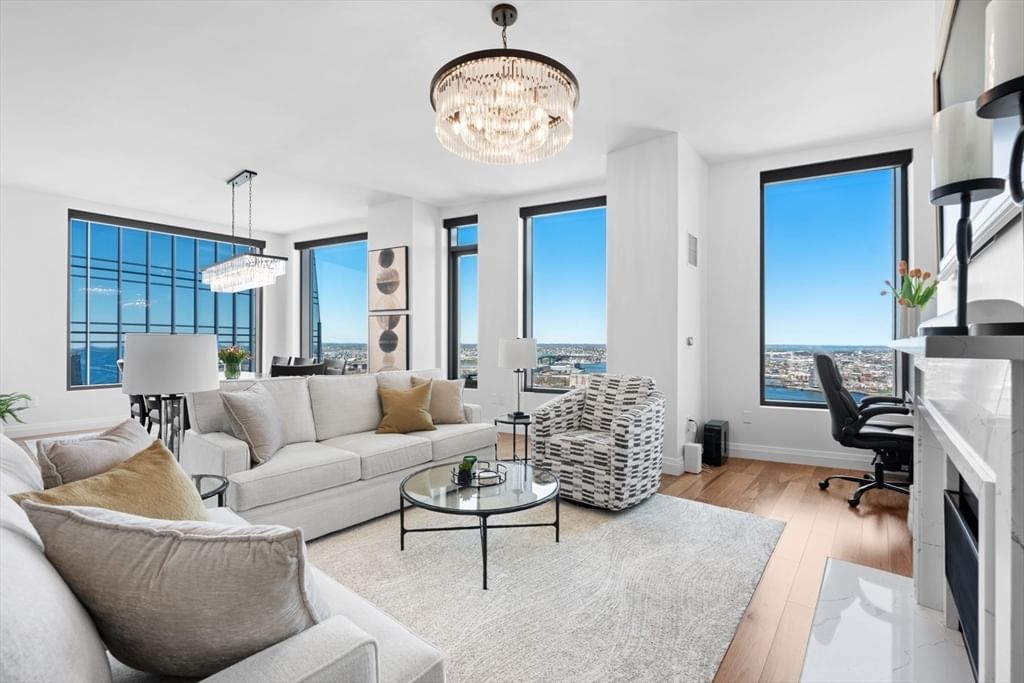
Beacon Hill rewards capital with a long hold horizon and a tolerance for low entry yields. In exchange, you get transit access to two major job centers, rental demand anchored by Boston Common , the Public Garden , and Charles Street, and a supply base that zoning and historic review keep fixed.
What you give up:
•Cash flow: Low entry cap rates are typical.
•Density upside: Limited by Boston's separate zoning regime, which has permitted only 50 ADUs to date.
•Speed: Exterior work and unit additions require historic commission review.
•Tax efficiency: Investors who don't live in the building pay the full $12.40 residential rate without the exemption.
If your strategy needs yield from day one, nearby markets with lower estimated tax burdens, such as Medford, Revere, or Chelsea, will pencil more easily. If you're preserving capital and can execute a disciplined systems-and-interiors rehab, the fixer-upper spread is where Beacon Hill's returns come from.
How much do Beacon Hill multi-family homes cost in Boston, MA?
Over the last 12 months, the median list price for Beacon Hill multi-family homes and duplexes was $1,297,000 across 153 sales. At that basis, a 5% cap rate requires about $64,850 in annual NOI, or roughly $108,000 in gross annual rent if expenses run at 40%.
What does a Beacon Hill budget buy for condo, townhome, or small multi-family investors in Boston, MA?
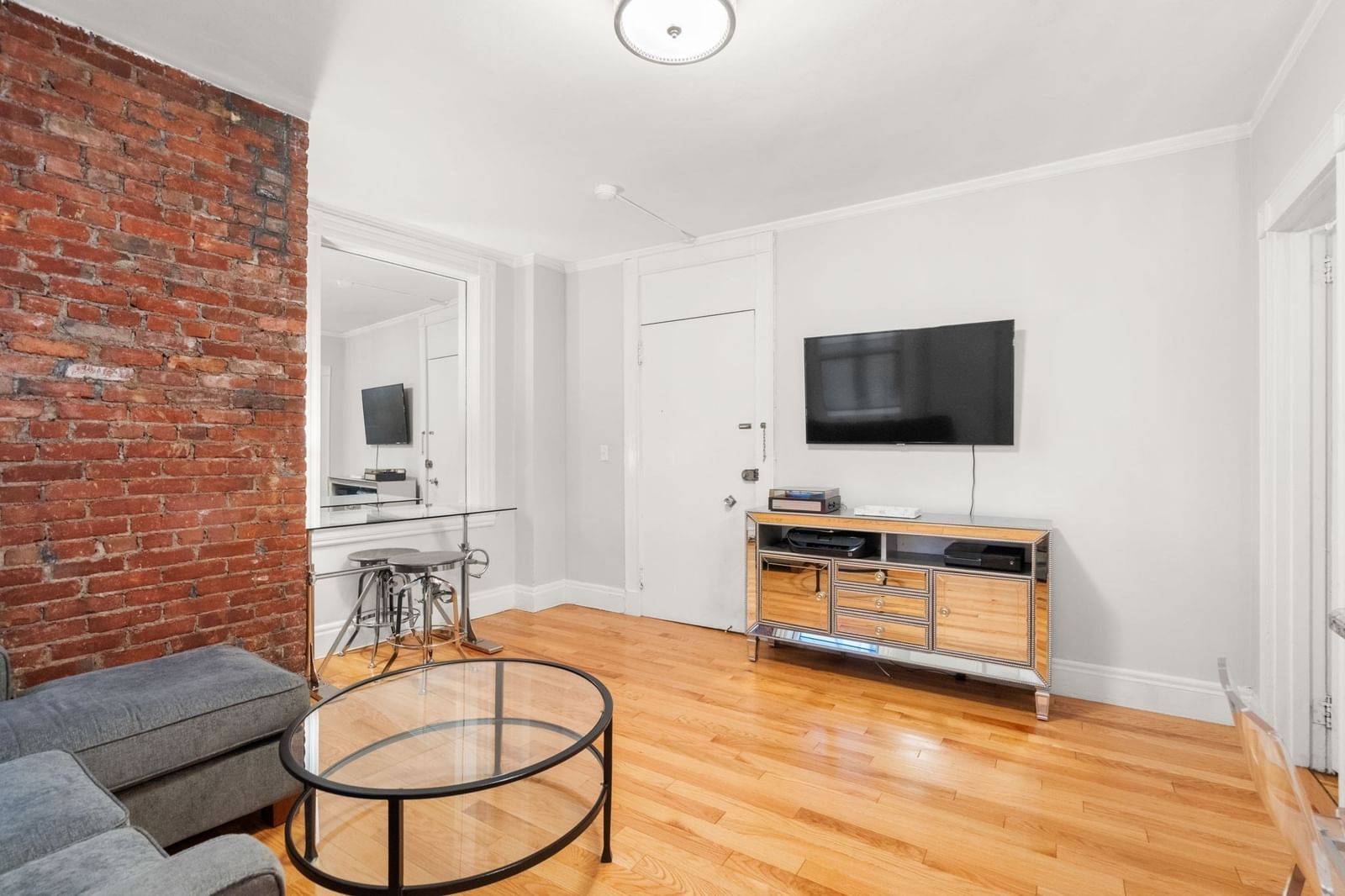
Beacon Hill pricing sits at the top of the Boston market, and much of the housing stock dates to the late 1700s. Investors are usually buying historic rowhouse-style assets with limited density upside, not properties where new units or major expansions are easy to add.
What is the commute from Beacon Hill in Boston, MA to major job centers?
The Financial District is about 1 mile from Beacon Hill, with an estimated 16-minute transit commute or about 8 minutes by car at an 8:00 weekday-morning departure. Kendall Square is also about 1 mile away and about 20 minutes by transit at the same hour.
Is Beacon Hill in Boston, MA practical for tenants or families without a car?
Beacon Hill has walking access to the Red, Green, and Blue Lines through Park Street, Charles/MGH, Government Center, and Bowdoin. That three-line coverage across four stations helps support car-light living, especially because most Beacon Hill buildings have no off-street parking.
What should buyers know about schools before investing in Beacon Hill, Boston, MA?
School-specific assignment and performance figures are not established by the available Beacon Hill investment data, so buyers should verify the exact school assignment for a specific address. For family-oriented rental demand, the documented neighborhood anchors are Boston Common, the Public Garden, Charles Street, and transit access to the Financial District and Kendall Square.
How do property taxes affect affordability in Beacon Hill, Boston, MA?
Boston’s current residential tax rate is $12.40 per $1,000 of assessed value. If a Beacon Hill property were assessed at the $1,297,000 median multi-family list price, the annual tax bill would be about $16,100.
How does Beacon Hill, Boston, MA compare with nearby towns on property taxes?
Boston’s estimated yearly city-wide median tax bill is $10,657, below Brookline at $12,907 and Somerville at $11,000, but above Cambridge at $8,004. Beacon Hill prices run above Boston’s median, so a Beacon Hill tax bill is likely to land above the city-wide figure.
What is the main drawback of living in or investing in Beacon Hill, Boston, MA?
The main trade-off is cost versus yield: Beacon Hill offers transit access, Charles Street amenities, Boston Common, and fixed historic supply, but entry cap rates are low. Investors who do not live in the building also pay the full $12.40 residential tax rate without Boston’s owner-occupant residential exemption.
Why work with Nick Mishol in Beacon Hill, Boston?
I'm Nick Mishol, a Boston real estate agent helping buyers, sellers and investors in Boston, Brookline and Newton. I bring rental-market experience to every deal. Track record — Transaction Count: 500+; Years Experience: 6+. Call (617) 913-5660 or send a message through the contact page.